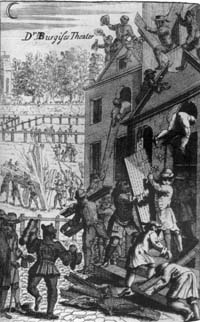
from Black, An Illustrated History of Eighteenth-Century
Britain, 120 (Daniel Burgess's Presbyterian meeting-house
in Carey Street, London, is wrecked by the mob.)
from Black, An Illustrated
History of Eighteenth-Century Britain, 196 (Robert Clive returned from India as victor of Plessey, 1757, and bought an estate
in Shropshire. Sat as MP for Shrewsbury. Election jugs were part
of the process of "treating" the constituents.)
week 5. Britain and Europe in the Revolutionary Age, 1780s-1815
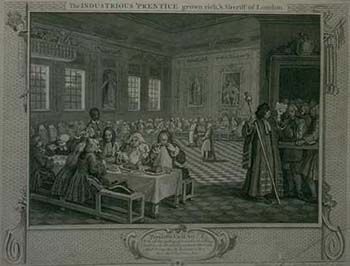
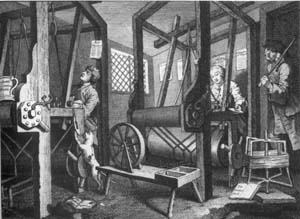
from Black, An Illustrated History of Eighteenth-Century
Britain, 35 (Mid-18th century machines were still dependent on human
energy. Note the broadside song or poem of D. Defoe's Moll Flanders hung upon the idle apprentice's loom).
week 7.
Parliamentary Reform and Reformers, 1815-1840s
3 Oct. Kent, NHoB, Ch. 6 “The Age of Reform, 1820-1848"
week 14. The People's Peace and I'm all Right Jack, 1945-1960s
28 Nov. NHoB, Ch. 13 “Appeasement, World War, & the Establishment of the Welfare State, 1935-1962" (pp. 416-423); Ch. 14 “The Shock of the New: Decolonization & the Creation of a New Society, 1947-1996" (to p. 440)
30 Nov. Mass Observation: Wing, 1942-45
from Roberts, A History of England,
2: 788
week 15. Northern Ireland and Devolution
5 Dec. NHoB, Ch. 14 “The Shock of the New: Decolonization & the Creation of a New Society, 1947-1996" (pp. 440-455); Ch. 15 “The Make-Up of Britain, 1997-2015" (esp. pp. 462-467)
7 Dec. Mass Observation presentations due
11 Dec., Monday, 12:30–2:30 pm, FINAL EXAM
Issued by Textbook Rental (draft: to be updated):
Equiano, Olaudah. The Interesting Narrative of the Life of.... 1789. Ed. Werner Sollors. New York: W.W. Norton, 2001.
Graves, Robert. Good-bye to All That. 1929, 1957. New York: Anchor Books, 1985.
Kent, Susan Kingsley. A New History of Britain since 1688: Four Nations and an Empire. New York: Oxford University Press, 2016.
Wing, Sandra Koa, ed. Our Longest Days: a People's History of the 2nd World War. London: Profile Books, 2009.
His 3110 provides a narrative of British history from the Revolution of 1688-89 through the upheavals of the late 20th century. It stresses the social, economic, and even religious bases of struggles about parliamentary democracy and imperial domination. It also provides a chance to understand the contemporary issues in Britain from the seventeenth to the twenty-first centuries by using sources from the period.
Goals:
Develop an understanding of the basic narrative of modern British history (esp. 1689-1989)
Compare/contrast the British basic narrative to periods and concepts of modern European/World history:
political revolution,
industrial revolution,
political revolution and stability,
party,
urbanization,
social class,
war,
decolonialism
Relate ideas to action, the intellectual elite to socio-economic realities in the 18th-20th centuries
Use and analyze primary sources and secondary works on modern British history
Three themes:
a. Industrious Britain and Social Class
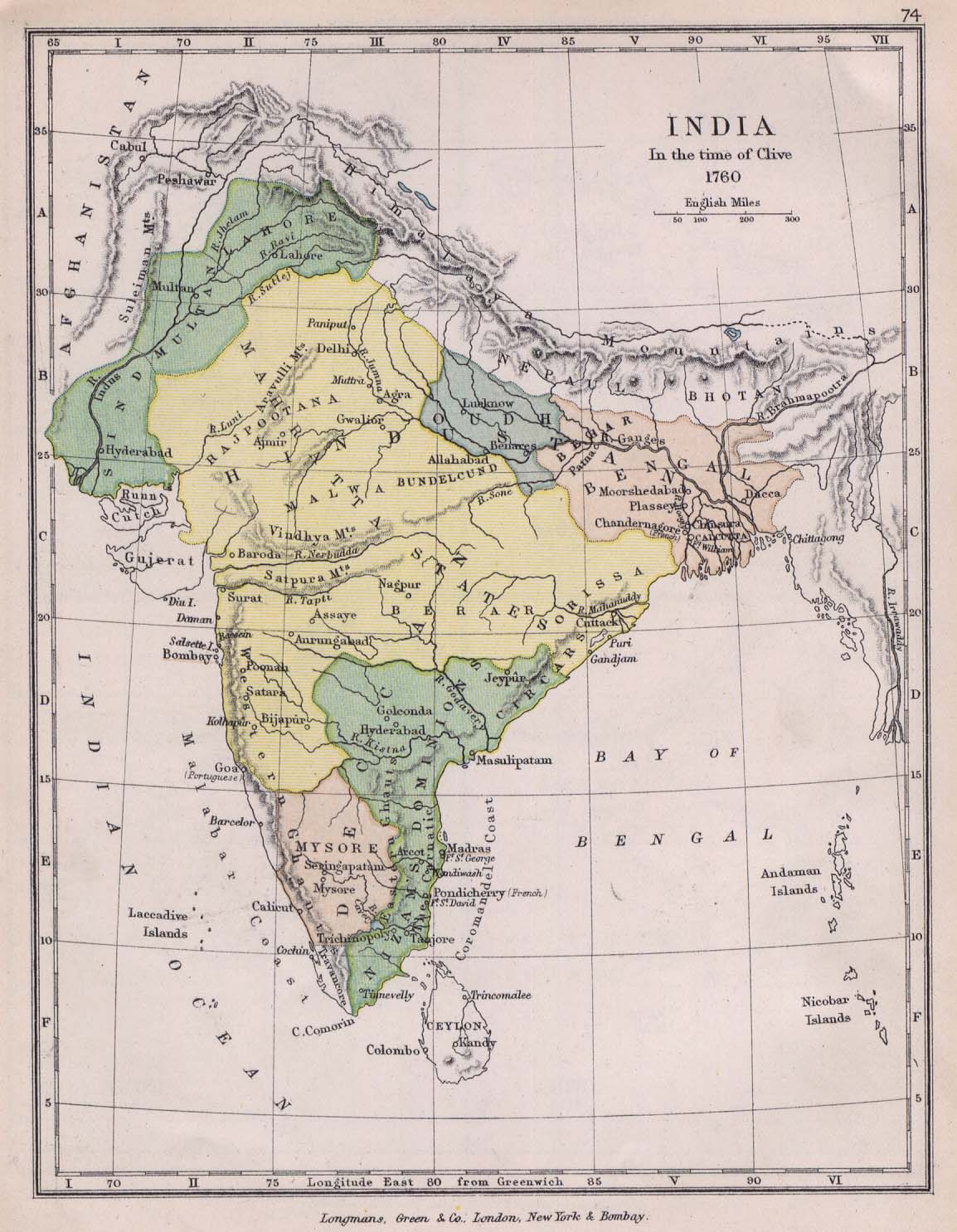
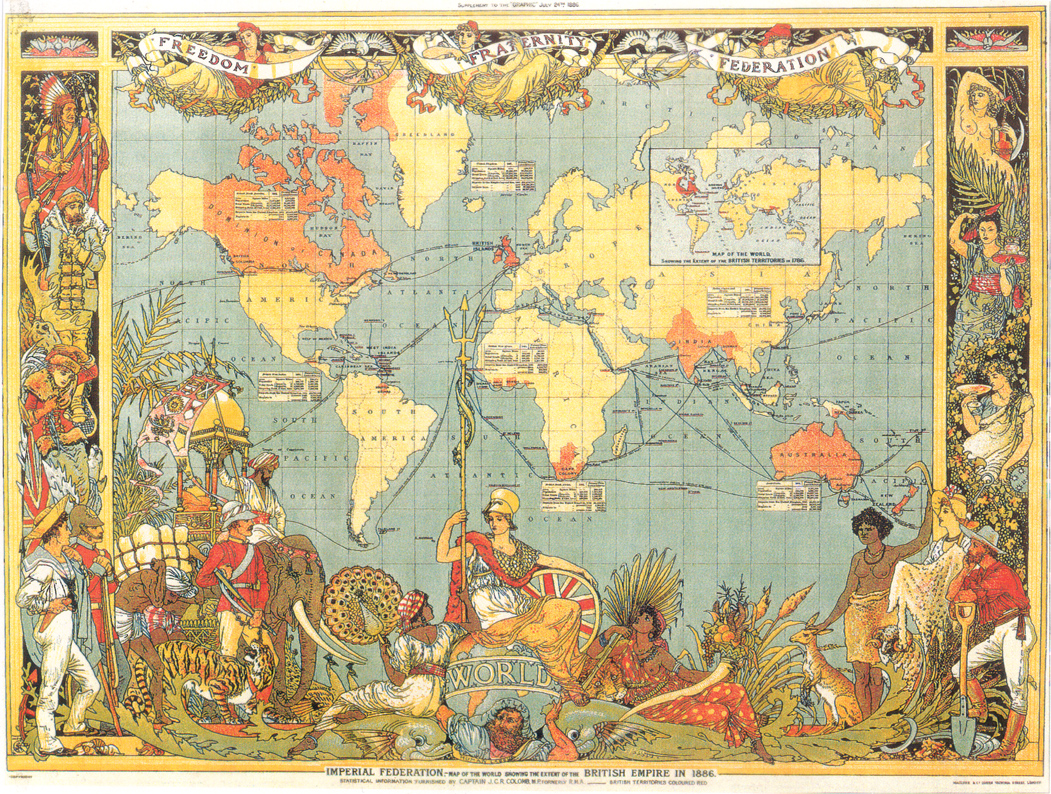
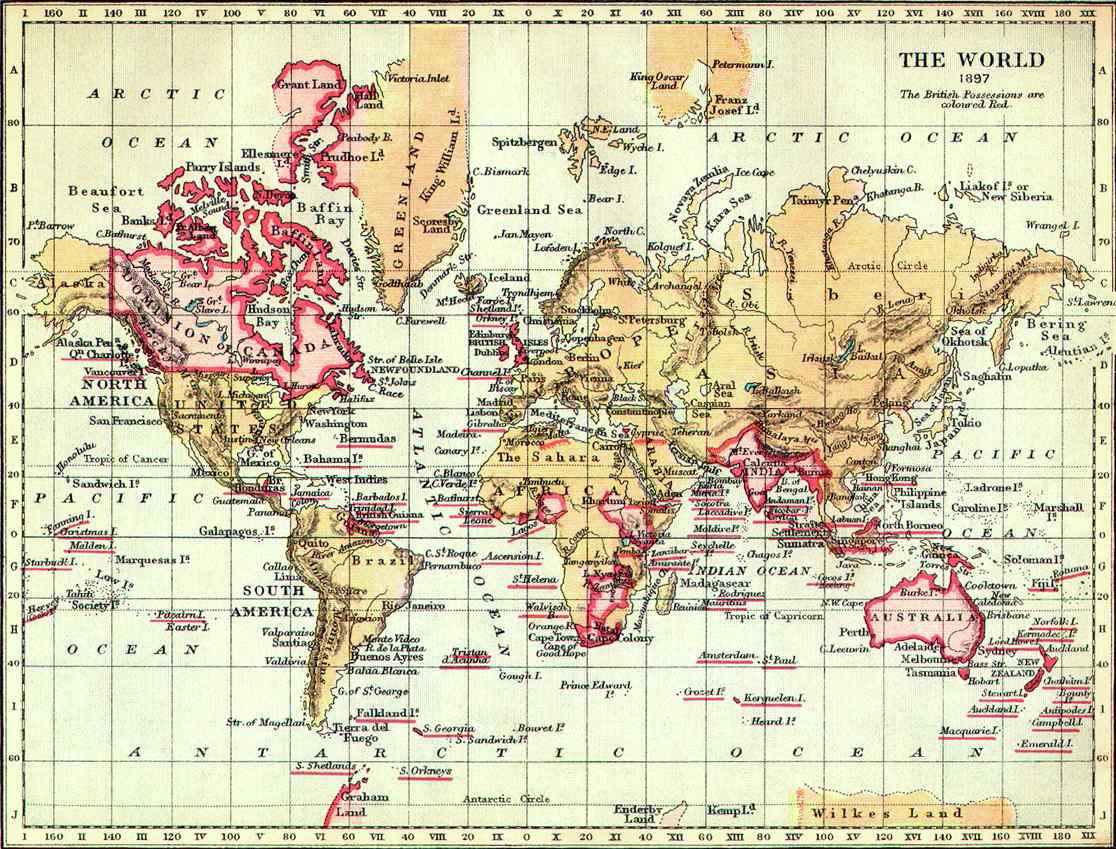
b. Rise and Fall of Imperial Britain
c. Experience of War (between the home front and the trenches)



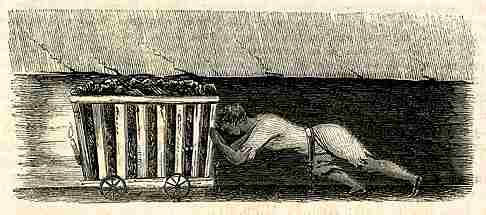 from Lord Ashley's report on children in mining from 1842
 "Work," Ford Madox Brown, c. 1863